An an economics professor at Brown University, Emily Oster, joins Paul E. Peterson to discuss Oster’s latest research, which finds that pass rates on standardized tests declined in district schools during the Covid-19 pandemic, and that those rates were lower in schools with less in-person instruction.
It is a difficult task to stand up to your boss and to take on corporate greed in your workplace, but workers in West Virginia, in Alabama, in California, and all over this country are leading that fight.
Social skills like communication, cooperation, collaboration, social intelligence, and conflict resolution are increasingly important in the workplace.
The shock of Covid-19 sparked “the big quit,” with large numbers of American workers voluntarily leaving their jobs.
This exodus led The Economist to proclaim 2022 “the year of the worker.”
Truth be told, this reappraisal of what individuals want from work is wrenching in many ways—for workers, employers, and the public.
But this disruption has an upside.
It’s forcing America’s outdated education and training regime—from K–12 to postsecondary and including corporate approaches—to reconsider how to prepare individuals for jobs and careers or reconnect those who have been displaced, so that all can be on a pathway to opportunity and human flourishing.
Economists tell us that this regime reassessment must include an examination of lessons learned from what’s come to be called the “economics of skill development.” This field studies the relationship between our cognitive and noncognitive domains—often referred to as “hard skills” and “soft skills”—especially how they affect wages and labor-market success, with the results advancing or hindering an individual’s pursuit of opportunity.
Understanding this relationship can help to guide the development of a renewed education and training regime, an opportunity framework that underscores the relational aspects of success rather than focusing on its technical or material dimensions.
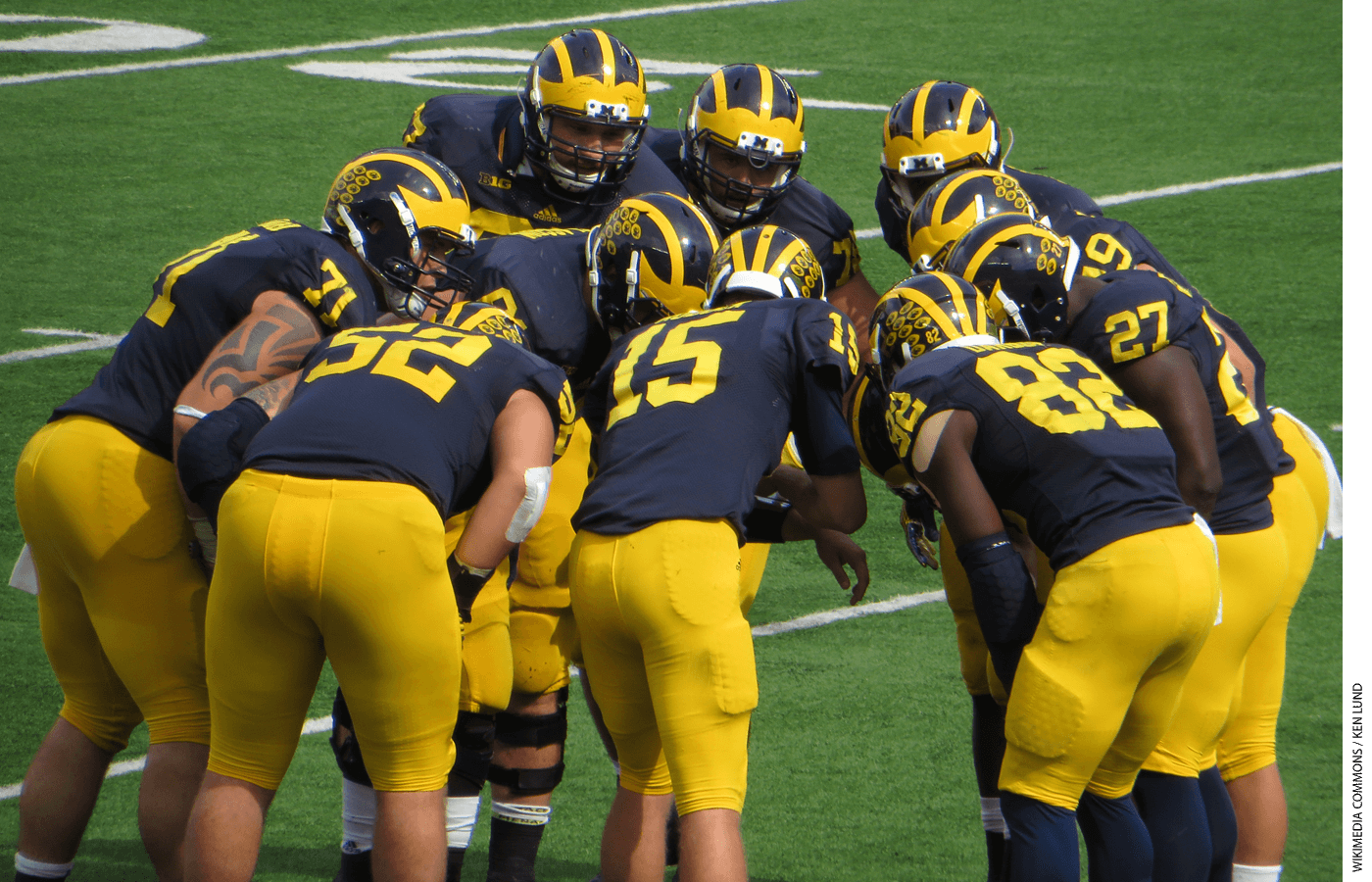
Team players advance group performance by inspiring the efforts of teammates.
Skill Development and Labor Market Success
Harvard economist David Deming, a premier analyst in this field, has shown in an analysis of the National Longitudinal Survey of Youth that, since 2000, the significance of cognitive skills has declined as a predictor of labor-market wage success. Conversely, the economic importance of noncognitive skills, especially social skills, increased after 1997. He concludes, “Social skills are a significantly more important predictor of full-time employment and wages for youth in the 2004 to 2012 period, compared to the late 1980s and 1990s.”
These skills are characterized by high levels of nonroutine, interpersonal exchanges with others. They manifest themselves in capabilities like communication, cooperation, collaboration, social intelligence, and conflict resolution.
His analysis further reveals that, between 2000 and 2012, science, technology, engineering, and math (STEM) jobs decreased as a share of U.S. employment, while the share of non-STEM professional jobs in management, nursing, and business support grew at a faster rate than it had in the prior decade. Overall, between 1980 and 2012, the share of social skill jobs grew nearly 12 percentage points as a share of all jobs, with wages for these jobs growing more rapidly than those for other occupations. These non-STEM jobs rely extensively on analytical skills and interpersonal interaction.
Moreover, individuals with social skills are team players with a sense of mutual obligation that has benefits and burdens. Deming and his Harvard colleague Ben Weidmann find “suggestive evidence” that these team players advance group performance by inspiring the efforts of teammates, leading Deming to define teamwork as “workers trading tasks…and reducing the worker-specific cost of coordination…with others.”
A 2021 analysis by Deming shows that, after age 35, life-cycle wage growth is substantially greater in occupations that rely on nonroutine, high variance jobs that are decision intensive and require worker adaptation. In other words, having social skills produces a wage premium. And since these people-intensive skills are learned and developed through practice and feedback over extended periods of time, peak earning years have progressed up the age spectrum to the 50s from the 30s.
He summarizes this perspective by saying, “Strong cognitive skills are increasingly a necessary—but not a sufficient—condition for obtaining a good, high paying job. You also need to have social skills.”
In a paper that examined the economic return of hard and soft skills, economist Laura Chioda and colleagues looked at the medium-term impacts of a three-week, residential mini-MBA program. They examined two separate programs using a sample that included 4,400 high school students in Uganda. One program featured a mix of approximately 75 percent hard skills and 25 percent soft skills, while the other reversed this mix. The program training did improve both hard and soft skills, though “only soft skills were directly linked to improvement in self-efficacy, persuasion, and negotiation.” Additionally, the skill upgrade produced “substantially higher earnings.”
Bridging social capital occurs between social groups, reflecting the need to connect with individuals different than ourselves, expanding our social circles across demographics and interests. Bridging social capital is for “getting ahead.”
An Opportunity Framework
What I call an “opportunity framework” can reorient the current education and training regime across the age continuum to develop both cognitive and noncognitive capabilities, especially social skills, so individuals can pursue opportunity and flourish as adults.
The essential elements of an opportunity framework are what individuals know and who they know—knowledge and networks (or relationships). Cultivating habits of mind and association—cognitive and noncognitive capabilities—are the building blocks of individual opportunity. They are habits because pursuing knowledge and developing networks require behaviors learned and internalized through practice. These habits are also moral strengths that can produce prosocial behavior. A combination of habits of mind and association enables the pursuit of opportunity and human flourishing.
In short, an opportunity equation emerges: Knowledge + Networks = Opportunity.
Habits of mind encompass the hard skills needed for any occupation—that is to say, subject or domain knowledge, including technical knowledge. They involve three modes of thinking: goals thinking, or defining and setting achievable learning goals and outcomes; pathways thinking, or creating a route to those outcomes; and agency thinking, or the mental energy and self-reliance needed to pursue one’s goals along defined pathways. Pathways and agency thinking work together to foster the pursuit of goals and outcomes.
Habits of association include social skills. They lead to personal and professional networks that involve two complementary kinds of relational or social capital: bonding and bridging. Bonding social capital occurs within a group, reflecting the need to be with others for emotional support and companionship. Bridging social capital occurs between social groups, reflecting the need to connect with individuals different than ourselves, expanding our social circles across demographics and interests. As social scientist Xavier de Souza Briggs says, binding social capital is for “getting by,” and bridging social capital is for “getting ahead.”
Social capital includes relationships with individuals, midlevel groups or firms, and large local and national institutions that order society—the legal and judicial institutions where social capital becomes civic capital. Social psychologists Jonathan Haidt and Selin Kesebir describe how these elements intermingle as “the puzzle of cooperation,” beginning with those “who share the same gene because of descent from a recent common ancestor [expanding to] non-kin cooperation in large groups,” echoing Deming’s notion of social skills and teamwork.
Jobs, a Career, and Opportunity Pluralism
Understanding opportunity as a combination of knowledge and networks produces a framework for creating an education and training regime that community organizations like K–12 schools, workforce organizations, and other education and training enterprises can develop to advance opportunity. It aims to build the capacity of our present and future workforce in both the cognitive and noncognitive domains, better connecting current demand and supply.
The relationship between knowledge and networks is summarized by American Enterprise Institute Senor Fellow Brett Orrell: ”A technical skill can help you get a job, but noncognitive skills are necessary to building and sustaining a career.” Knowledge and networks are individual and social resources that lead to the development and accumulation of human capital and opportunity networks.
This notion of an opportunity equation is complemented by University of Texas law professor Joseph Fishkin’s ideas on how opportunities are structured and accessed by individuals, including how credentialing processes for work and career contain bottlenecks that deter opportunity. His argues for opportunity pluralism, an approach that offers individuals multiple credentialing pathways to work and career. This makes the nation’s opportunity infrastructure more pluralistic so individuals can pursue opportunity through many avenues linked to labor-market demands. These include paths like apprenticeships and internships; career and technical education; dual enrollment in high school and postsecondary and other training institutions; job placement for on-the-job training; career academies; boot camps for acquiring discrete knowledge and skills; and staffing and placement services. In short, opportunity pluralism aims to ensure that every American—regardless of background or current condition—has multiple pathways to acquiring the knowledge and networks needed for jobs, careers, and human flourishing.
The benefits of such an opportunity program would reach far beyond economic preparedness. They would include the importance of the relational aspects of success in addition to the technical or material dimensions—in short, the fact that relationships matter for individual and societal wellbeing.
This program also would also help individuals develop an occupational identity and vocational self. Choosing an occupation and developing a broader vocational sense of one’s values, abilities, and personality is important for adult success.
Further, the program would foster local civic engagement from employers and other community partners. And it has the potential to provide faster and cheaper pathways to jobs and careers.
This regime disruption and reassessment is a form of creative destruction, or the process through which new approaches replace the existing ones that were made obsolete over time. What emerges from this is a development narrative, or an account that chronicles individual agency, with individuals acquiring and extending knowledge and networks to help them succeed and flourish. Finally, this opportunity program will better place individuals on a trajectory to economic and social wellbeing, informed citizenship, and civic responsibility, laying a foundation for adult success, a lifetime of opportunity, and human flourishing.
Bruno V. Manno is Senior Advisor for the Walton Family Foundation’s education program. A version of this article also appeared at RealClearEducation.
Before taking the i-Ready Assessment, kindergarteners practice clicking on their answer choice (in this case, responding to “what do you use to see?”) and learn to push the speaker button to hear a question repeated out loud.
Way back in the late 1960s, when federal officials and eminent psychologists were first designing the National Assessment of Educational Progress, they probably never contemplated testing students younger than nine. After all, the technology for mass testing at the time—bubble sheets and No. 2 pencils—only worked if students could read the instructions and the questions, hold a pencil, and fill in their answers. Yes, there have been early-childhood assessments available for decades, instruments like the Peabody Picture Vocabulary Test, but they require teachers to sit down one-on-one with students while students sound out words, identify numbers, and demonstrate other skills in person. Using those sorts of tests for a nationally representative examination system would have been logistically complex, prohibitively expensive, and politically untenable.
Furthermore, in those days, most young children were not enrolled in school. Public education didn’t start until 1st grade in most places. It wasn’t until the 1970s, when most U.S. states offered grants to help school districts start kindergarten programs, that attending school at age five became commonplace (see “What Happened When Kindergarten Went Universal?”, research, Spring 2010). And while preschools existed, only 28 percent of four-year-olds attended them, and their focus was almost entirely on exploration, socialization, and play. With school not starting in earnest until age six or so, testing at age nine made sense.
But how times have changed. Forty-one states now require districts to offer kindergarten, and half of them mandate that students attend. Nationwide, 85 percent of five-year-olds are enrolled in pre-K or kindergarten, with 77 percent in full-day programs. Furthermore, the vast majority of America’s four-year-olds are in some kind of formal preschool program—68 percent, at last count. While there is still vigorous debate about what children should be doing in preschool, there is also a broadly shared expectation that students spend at least part of their time learning pre-literacy and pre-numeracy skills, so they can hit the ground running in kindergarten.
The other big change, of course, is technology. The choice is no longer between cheap bubble tests and expensive, one-to-one batteries. Modern assessments, given over Chromebooks, iPads, and other devices, can accurately assess student skills and understanding even before students can decode words on a page. Questions can be read aloud and speech-recognition software can record students’ verbal responses, which artificial intelligence can comprehend. Animated graphics and engaging videos can make the whole experience feel more like a game than a test.
This is why commercial test providers Curriculum Associates and NWEA have done what the NAEP designers may not have considered: created standardized tests for students as young as five. Banish from your head images of kindergarteners filling in bubble sheets. Instead, imagine kids playing an interactive game, much as they would on an educational app or website, during short testing sessions with plenty of “brain breaks.” The i-Ready and MAP Growth fall kindergarten assessments may look like games, but they also work to gather data that thousands of school districts use to identify student needs, spot trends, and target instruction.
Now that almost all NAEP exams are given on devices, too, there’s little reason to think that officials couldn’t design and offer a kindergarten exam as well.
Assessing Early Elementary
The rationale for testing academic skills in the early elementary grades is powerful. Consider the federal law behind NAEP, which defines its purpose as “to provide, in a timely manner, a fair and accurate measurement of student academic achievement and reporting of trends in such achievement in reading, mathematics, and other subject matter.” In its current form, NAEP leaves an enormous gap in our knowledge about what’s going on in schools. Most kids in this country are starting their education at age three or four, yet we don’t test them until age nine or until the 4th grade (using either the Long-Term Trend Assessment administered every four years or the newer “main NAEP” tests given every other year). That’s a long time for policymakers and researchers to be left in the dark about what’s going on and what students may or may not be learning.
Grades K–3 are arguably the most critical years of a child’s education, given what we know about the importance of early-childhood development and early elementary-school experiences. This is when children are building the foundational skills they’ll need in the years ahead. One report found that kids who don’t read on grade level by 3rd grade are four times more likely to drop out of high school later on. Why do we wait until after the most important instructional and developmental years to find out how students are faring?
Gaining access to valid and reliable kindergarten data would give us a much better chance at solving some of the mysteries that have stumped the field in recent years, especially about the trends we’ve seen in past decades. Those trends show big gains on NAEP for most students from the late 1990s until about 2010 or so, followed by a plateau and then a more recent, pre-pandemic decline in the achievement of the lowest-scoring students. Since we only have scores from the 4th, 8th, and 12th grades, most of the conversation naturally focuses on what might be happening in schools that accounts for the trends. But if we had kindergarten data, we might learn that it’s what’s happening before kids ever get to elementary school that is responsible for what we are seeing. What if kindergarten readiness has changed over time, and that’s what’s causing the ups and downs in pupil achievement? We might also gain valuable information about the foundational instruction that young students are receiving in kindergarten from the teacher surveys that go along with the tests. These surveys
can tell us, for example, what young students are learning, which instructional materials schools are using, and whether teaching methods are well aligned with the science of reading.
Even the test scores alone would be a huge contribution to our understanding. To get a glimpse of what we might see, consider a recent study by a quartet of scholars (see Figure 1). Using NWEA’s fall kindergarten MAP Growth assessment results from thousands of schools, weighted to represent the national population, they found a similar pattern to the one we see in NAEP data for older children: from 2010 to 2014, scores were mostly flat, followed by a significant decline through 2017 (when their time series ended).
This is intriguing but also frustrating, since we don’t have data from before 2010—NWEA wasn’t testing enough kindergartners back then—or for more recent years. But it indicates that whatever was driving down scores for older students, starting in the mid-2010s, might also have been reducing kindergarten readiness. And it also indicates how much more we could gain from the current NAEP administration with kindergarten data. Testing students in kindergarten could also give the public and policymakers a better understanding of how much students are learning in grades K–4, by establishing a baseline against which growth can be measured.
A Worthy Challenge
To be sure, the wizards who oversee the NAEP would have to figure out a number of technical and design challenges. For example, should the test focus on kindergarten readiness, and therefore be given in the fall? Or should officials focus on a spring assessment, to align with tests for the 4th, 8th, and 12th grades? How will they make sure that all test takers have access to similar devices and connectivity, so the testing conditions are the same from school to school? What if some kindergarteners are more familiar with technology than others? And when it comes to literacy, should the assessment focus solely on fluency, or the skill of sounding out words and making sense of them, or should it also focus on comprehension, even if students aren’t actually reading yet themselves? How will NAEP’s sampling work given that kindergarten, while ubiquitous, is not universal?
Even with modern technologies, kindergarten assessments aren’t quite as valid and reliable as those for older students. At least that’s the case for i-Ready Assessment and MAP Growth, partly because their vertical scales start at grade K and there’s always more statistical noise at the bottom and the top of such scales. Officials would need to figure out how to make a kindergarten NAEP as trustworthy as its other assessments.
And then there are the financial and political headwinds. As it stands, NAEP doesn’t have enough money to implement all of the assessments officials would like to give. So if we were to add kindergarten testing, Congress would either have to provide more money, or tests in other subject areas or grade levels would need to be cut.
None of these challenges should be insurmountable. If NAEP were being designed today from scratch, it’s hard to imagine that kindergarten assessments would not be included in the package. We’ve been operating in the dark around early childhood long enough. It’s time to turn on the lights.
Michael J. Petrilli is president of the Thomas B. Fordham Institute, research fellow at Stanford University’s Hoover Institution, co-editor of How to Educate an American, and executive editor of Education Next.
By: Michael J. Petrilli Title: The Case for Kindergarten Tests Sourced From: www.educationnext.org/case-for-kindergarten-tests-starting-naep-4th-grade-much-too-late/ Published Date: Wed, 05 Jan 2022 10:00:27 +0000
Kim Fritschy, left, joins other teachers calling for increased Covid-19 testing outside P.S. 64 Earth School Tuesday, Dec. 21, 2021, in New York.
As Covid enters its Omicron phase, common sense is beginning to creep in. The Centers for Disease Control and Prevention have cut quarantine time to five days from ten days not because new research has suddenly produced a new magic number but because a ten-day interval is disrupting the country’s transport systems, restaurants, health provider networks, and economy as a whole.
But in education the capacity to balance remains far from ballerina perfect. Closed for the holidays, too many schools are floundering, acting like little boys who do not want their vacation to end. In Massachusetts teacher unions are demanding extra days off so that they have time to get tested. The state department of education has rejected their demands, but Cambridge and several other districts in the Boston area are deciding to keep doors shut. Washington, D. C., Baltimore, and Seattle school districts are following suit. More than 2,000 schools across the country are not welcoming children back to school the day after their New Year’s weekend. Nor are the country’s elite universities exempt from this sort of education hesitancy. My own employer, Harvard University, has insisted on going digital for three weeks; Stanford University has decided two weeks is enough—at least for now.
The longer this kind of education hesitancy persists, the greater the damage to the education of a whole generation of students. We now know the learning losses in 2020-2021 were large, and we now know that social isolation, if we didn’t know it from the beginning, causes emotional stress that for some can be devastating. It’s time to return to the past when people lived through diseases without ruining their lives. I only wish schools, colleges, and families would practice my mom’s rules for handling such matters, which I outlined in an op-ed on New Year’s Eve.
These continuing disruptions are disturbing, but elsewhere there are signs that some semblance of balance is being restored and we can yet celebrate a Happy New Year.
Paul E. Peterson is the Henry Lee Shattuck Professor of Government and Director of the Program on Education Policy and Governance at Harvard University, a Senior Fellow at the Hoover Institution at Stanford University, and Senior Editor of Education Next.
In this replay episode of the Education Exchange, the Paul and Jean Hanna Senior Fellow at the Hoover Institution of Stanford University, Eric Hanushek, joins Paul E. Peterson to discuss Hanushek being awarded the $3.9 million Yidan Prize, honoring individuals or teams that have significantly contributed to the theory and practice of education.
By: Education Next Title: The Education Exchange: “The Only Way We’ll Have Economic Development in Some of the Developing Parts of the World Is To Improve the Schools” Sourced From: www.educationnext.org/education-exchange-only-way-well-have-economic-development-in-some-of-the-developing-parts-of-the-world-is-improve-schools-hanushek/ Published Date: Mon, 03 Jan 2022 10:00:16 +0000
 An an economics professor at Brown University, Emily Oster, joins Paul E. Peterson to discuss Oster’s latest research, which finds that pass rates on standardized tests declined in district schools during the Covid-19 pandemic, and that those rates were lower in schools with less in-person instruction.













 In this replay episode of the Education Exchange, the Paul and Jean Hanna Senior Fellow at the Hoover Institution of Stanford University, Eric Hanushek, joins Paul E. Peterson to discuss