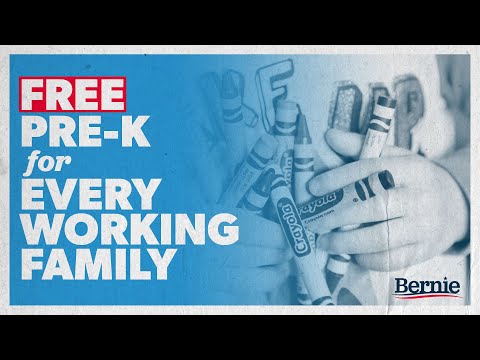
I want you to imagine an America in which every working family is guaranteed free pre-K education for their kids.
Join us at www.berniesanders.com!

News…. browse around here

I want you to imagine an America in which every working family is guaranteed free pre-K education for their kids.
Join us at www.berniesanders.com!
News…. browse around here

Beyond Standards: The Fragmentation of Education Governance and the Promise of Curriculum Reform
by Morgan Polikoff
Harvard Education Press, 2021, $60; 192 pages.
As reviewed by Natalie Wexler
The many education reformers who have relied on academic standards to boost student achievement might outline their theory as follows: States broadly define what students should know and be able to do at specific grade levels. Publishers use these standards to create detailed curricula, which districts adopt. Teachers receive training in the standards’ requirements. Students’ progress is tracked by standards-based assessments. And educators are held accountable for the results. The expected outcome: markedly higher student achievement and a narrowing of racial and income-based gaps.
In Beyond Standards, Morgan Polikoff demonstrates that this theory hasn’t matched reality. He argues that standards are inherently too vague to enable teachers to arrive at a common or accurate understanding of what they need to teach or to identify the right materials for teaching it. Polikoff also points to decentralized governance as a problem. With over 13,000 school districts in the United States, he argues, it’s impossible to provide all students with a standardized educational experience.
Polikoff pins his hopes for improvement in K–12 education partly on high-quality curriculum rather than standards. As he notes, studies have shown that the effect of a high-quality curriculum on student outcomes can be as strong as the effect of having a veteran rather than a novice teacher. He also supports a more active role for states. Citing Louisiana as an example, he argues that states should identify or create high-quality curricula and exercise greater control over decisions typically left to districts, schools, or individual teachers (see “Louisiana Threads the Needle on Ed Reform,” features, Fall 2017). Polikoff even urges states to mandate that districts adopt curricula from among a limited set of state-approved options.
That aspect of his reform prescription is more problematic. As Polikoff is aware, the idea of state-mandated curriculum flies in the face of a strong American tradition of local control. Some states—20 or 25 by his estimate—issue lists of approved curricula or textbooks, but none require districts to use those on the list. In the other states, curriculum decisions are left entirely to districts. When Polikoff advised one state’s education leaders simply to collect data on which curricula districts were using, they protested that “district folks would freak out and assume the state was trying to usurp their authority over teaching and learning.”
Beyond the logistical or political obstacles, though, it’s not clear states can be relied on to make good curriculum choices—especially in the area of literacy. Polikoff argues that decentralization has led to a plethora of curricular approaches, but there is a standard approach to literacy, referred to as “balanced literacy.” While curricula vary in some respects, most of the commonly used ones fail to guide teachers effectively in teaching phonics, an area where their training is often deficient. And almost all emphasize reading comprehension skills and strategies, such as “finding the main idea” or “making inferences.” Students practice the skills on “leveled texts”—books on various topics that they can read easily and that may be well below their grade level. Polikoff doesn’t specifically address either component of this widespread approach.
When he refers to high-quality literacy curriculum, he seems to have in mind a handful of newer curricula grounded in evidence that many children need systematic instruction in phonics to read fluently and that comprehension depends far more on academic knowledge than “skill.” These curricula put content in the foreground and go deeply into topics in social studies and science. Although they haven’t been studied as much as math curricula, the evidence on their effectiveness that does exist is promising.
But will state decisionmakers gravitate to these newer curricula or stick with what’s familiar? Polikoff seems to assume they’ll opt for the good stuff if they involve teachers in the adoption process and rely on guidance from organizations like EdReports, which rates curricula according to their alignment to Common Core standards. Teachers, though, may prefer to work with what they’re used to. And although EdReports ostensibly includes knowledge building as one of its criteria—and although the organization has rated several knowledge-building curricula highly—it has made some puzzling decisions of late.
For example, EdReports gave its highest rating to McGraw-Hill’s Wonders, one of the 10 most popular reading programs. But a recent critique by Student Achievement Partners, which evaluates curricula for how well they align with research evidence, found that Wonders is overstuffed, fails to spend enough time on some foundational skills, lacks coherence, and doesn’t build content knowledge systematically.
It’s not hard to imagine a state being misled by guidance from EdReports. In fact, that may have already happened in Florida, where the state’s new standards profess to value knowledge over reading-comprehension skills. Strangely, the recently announced state adoption list failed to include any of the curricula that focus on building knowledge but did include Wonders, along with some other lower-quality options. At the same time, several Florida districts had already conducted their own reviews and chosen actual high-quality curricula, only to find that the state later failed to recommend them.
Fortunately, those districts can still adopt high-quality curricula, although it might be more difficult or cost them more money. Polikoff calls such state incentives to use approved curricula “modest,” but they may be more powerful than he thinks. It’s essentially the method Louisiana used to induce districts to adopt high-quality curricula, and, as he reports, over 80 percent of schools in the state are now using such materials. But if Polikoff had his way, Florida would be able to prevent the districts that want high-quality curriculum from purchasing it and require them to use inferior curriculum instead.
In the abstract, Polikoff’s prescription makes sense: why not have 51 decisionmakers rather than 13,000? We might even wish we could have just one, like the many developed countries that have national curricula. But centralizing the decisionmaking process only makes sense if the decisionmakers understand what they’re doing. In Louisiana, curriculum adoption at the state level worked because of a visionary state superintendent of education, John White. There may be others like him, but at this point we can’t count on one being at the helm of every state department of education—or even most of them.
I agree with Polikoff that standards-based reform hasn’t worked—and in the case of literacy standards, which reinforce the mistaken notion that reading comprehension is primarily a set of skills, I think we would be better off without them. But weaning schools away from what’s familiar and toward what’s aligned with science will unfortunately take a lot more than jettisoning standards and giving authority over curriculum to the states.
Natalie Wexler is an education writer and author of The Knowledge Gap: The Hidden Cause of America’s Broken Education System—And How to Fix It.
Sign up for the Education Next Weekly to receive stories like this one in your inbox.
The post A Sharp Critique of Standards-Based Reform appeared first on Education Next.
By: Natalie Wexler
Title: A Sharp Critique of Standards-Based Reform
Sourced From: www.educationnext.org/sharp-critique-standards-based-reform-beyond-standards-polikoff-book-review/?utm_source=A%2BSharp%2BCritique%2Bof%2BStandards-Based%2BReform&utm_medium=RSS&utm_campaign=RSS%2BReader
Published Date: Thu, 05 Aug 2021 09:00:26 +0000
News…. browse around here


The IRS recently sent $15 billion in Child Tax Credit payments to the families of 60 million children. Parents woke up to find the first monthly distributions (averaging $483 per family) had been directly deposited into their bank accounts. These dollars are part of the $110 billion in expanded child tax credits legislated by this spring’s $1.9 trillion American Rescue Plan Act. While these funds are not targeted at education, the program has opened a temporary window that could help vastly expand school choice.
The American Rescue Plan Act created an unrestricted, refundable child tax credit of $3,600 for children under 6 and $3,000 for children aged 6 to 17. The full credit applies to all families making less than $150,000, and the balance is paid as a cash transfer if the total exceeds their federal tax burden. After a year, unless Congress extends the increase, the credit will revert to $2,000 per child and become only partially refundable (see this issue’s forum, “Should Congress Make the Expanded Tax Credit Permanent?”).
To understand how the child tax credit might be made into something more educationally transformative, consider three things.
First, $3,000 may seem modest compared to the cost of schooling—the sum is less than a quarter of what public schools spend per child each year—yet it’s more than 60 percent of tuition at a typical Catholic elementary school. In fact, $3,000 isn’t much less than the average voucher awards (of $4,000 to $5,000) in states like Indiana, North Carolina, and Ohio.
Second, at this moment, governors and state legislators have exceptional financial flexibility to augment or supersize the child tax credit funds. State budget collections are coming in much higher than was anticipated last year, while the American Rescue Plan Act delivered state and local governments $350 billion in federal Covid aid—atop the $130 billion in K–12 aid.
Third, the child tax credit offers an opportunity to extend school choice to a broader swath of families. President Joe Biden and a Democratic Congress just opted to send child tax credit funds to the families of 80 percent of the nation’s children. If we were to stipulate that choice programs should serve the kids whom these officials deemed in need of these funds, that would vastly expand the ranks of the eligible. It would be awkward for Democrats to argue that middle-class parents need federal help paying their bills but are too well-off to merit state help in defraying the cost of schooling.
In short, state leaders have the opportunity to offer families expanded educational options at a time when support for school choice has exploded. The most promising tack is to augment the federal tax credit for any family that chooses to spend its funds on school tuition or another documented educational cost. A temporary 50-percent state match for families who use the funds to pay tuition could make the credit for many worth about as much as the voucher offered in leading school-choice states; a 100-percent match, funded with general Covid aid, could make it exceptionally large.
Such a move allows states to radically expand the ranks of the eligible while hewing to the eligibility criteria endorsed by Democratic leaders. (In our school life column for this issue, Robert Behning, the chair of the Indiana house education committee, makes precisely this argument.) The resulting program would only run as long as the expanded child tax credit, but it could spark a taste for choice among many.
State leaders should also explore ways to augment the credit with education savings accounts, and then help parents understand how to marry the two. Earlier this year, for instance, West Virginia enacted its first education savings account program, providing eligible families with $4,600 per child (See “School Choice Advances in the States,” features). Combined with the maximum child tax credit payment, that yields $7,600 per child—an amount that exceeds the cost of tuition in 9 out of 10 West Virginia private schools. Energetic use of the bully pulpit could encourage some families to think of child tax credit payments as education-choice funds.
The expanded child tax credit is a one-year program. If it goes away, children will have benefited and the constituency for choice will grow. And if it becomes permanent? Then state leaders will have the opportunity to do even more.
Frederick M. Hess
Executive Editor
Sign up for the Education Next Weekly to receive stories like this one in your inbox.
The post How a Turbocharged Child Tax Credit Could Electrify School Choice appeared first on Education Next.
By: Frederick Hess
Title: How a Turbocharged Child Tax Credit Could Electrify School Choice
Sourced From: www.educationnext.org/how-a-turbocharged-child-tax-credit-could-electrify-school-choice/?utm_source=How%2Ba%2BTurbocharged%2BChild%2BTax%2BCredit%2BCould%2BElectrify%2BSchool%2BChoice&utm_medium=RSS&utm_campaign=RSS%2BReader
Published Date: Wed, 04 Aug 2021 09:00:39 +0000
News…. browse around here

Not too long ago, I took my first plane flight in more than a year, heading out to Salt Lake City to help launch a new statewide civics push in Utah. It was good to be somewhere different and it was really good to actually engage with a room full of strangers, appreciate how body language and inflection can soften a pointed rejoinder, and just interact with live people rather than pixels.It’s funny how the sights, sounds, and presence of those people can help remind you that they’re real and not just one-dimensional beings against a fake background on a Zoom call or disembodied characters in a social-media post. It can change your behavior, too. I think it’s a whole lot harder for us to rant or work up spittle-flecked rage at people when they’re in front of us. When we see one another and talk to one another, a certain baseline empathy tends to kick in.
Those impulse checks are in short supply when things are virtual. As a result, it’s easy to lash out, for others to lash out in response, and for us all to wind up nursing bitter, festering contempt for cartoon versions of people we don’t actually know.
Sonny Bunch flagged this past May how a frustrating technical glitch in Amazon’s search algorithm gave rise to right- and left-wingers alike rushing to insist that there was an attempt to silence them. While Big Tech certainly deserves careful scrutiny for some suspect goings-on, it was pretty readily shown that there was nothing here beyond even-handed ineptitude. Yet, even as that was being sorted out, Bunch noted, online warriors “started putting together comprehensive indexes of prohibited books.”
Reflecting on the whole thing, Bunch observed, “We have built echo chambers that perpetuate falsehoods and designed defenses to keep the truth out . . . We’ve done a great job of building up silos for ourselves—comfortable places that echo and amplify our opinions. But the thing about a silo is that it radically restricts your view of the world.”
This silo construction is trickier, messier, and less successful when you’ve got to physically interact with people. Online engagement allows you to much more readily find the like-minded, reduces the inhibitions that check our nastiest impulses, and scrapes away all the complexity that marks in-person interaction. I think we’ve all accumulated endless instances of this. I don’t know how many times a friend or colleague has said to me, “I kind of regret sending that now. I’d never have said that in person, but I was so angry I just fired it off.”
In theory, social media could foster a culture of inquiry and debate. Whether or not that was the case two decades ago, it’s certainly not the online world of today. What we have instead is what Scott Alexander has described as an “echo culture,” where people gather in ideological communities that serve to amplify outrage and groupthink.
This is a poisonous state of affairs, one which literally hard-wires our brains in ways that make it harder for us to feel empathy, understand different views, or find points of commonality with those outside our silo.
When I talk this way, I inevitably hear from educators who tell me I’m selling social media short. They tell me how they like having their students engage on social media as a resource or a forum.
I get it. Every technological advance, from the automobile to the television, brings with it both the good and the bad. Technology tends to make life easier and more connected, even as it exacts a price. That’s why conversations about new technologies, from drones to vaccines to self-driving cars, often focus on determining who should use them, when, and under what circumstances.
All of us would benefit from more of that when it comes to social media. More efforts to discipline ourselves as to how often we’re on and the kinds of things we write would be all to the good, as would taking concrete steps to emerge from our silos and finding more opportunities to engage in person with people who see things differently.
But, specifically when it comes to youth, I think parents and schools would benefit from thinking about social media not as a few apps embedded in a ’tween’s phone but as sophisticated, double-edged tools that we should learn to use carefully and deliberately. I’m not simply talking about helping students learn to spot fake news or avoid obviously inappropriate content but about helping them build the muscles of personal engagement that otherwise atrophy online.
Social media tends to reward outrage and certainty. It has little use for empathy or nuance. It may nonetheless be a valuable tool (though I have my doubts). Be that as it may, it increasingly seems to me that our approach to helping youth navigate all this is a lot like tossing the keys to a motorcycle to an 11-year-old and saying, “Remember, look both ways and drive safe.”
We can do a lot better.
Frederick Hess is director of education policy studies at the American Enterprise Institute and an executive editor of Education Next.
This post originally appeared on Rick Hess Straight Up.
Sign up for the Education Next Weekly to receive stories like this one in your inbox.
The post Social Media’s Like Tossing a ’Tween the Keys to a Harley appeared first on Education Next.
By: Frederick Hess
Title: Social Media’s Like Tossing a ’Tween the Keys to a Harley
Sourced From: www.educationnext.org/social-medias-like-tossing-a-tween-the-keys-to-a-harley/?utm_source=Social%2BMedia%25E2%2580%2599s%2BLike%2BTossing%2Ba%2B%25E2%2580%2599Tween%2Bthe%2BKeys%2Bto%2Ba%2BHarley&utm_medium=RSS&utm_campaign=RSS%2BReader
Published Date: Mon, 02 Aug 2021 09:01:07 +0000
News…. browse around here

 A Professor of Education at Stanford University, William Damon, joins Paul E. Peterson to discuss Damon’s new book, A Round of Golf with My Father: The New Psychology of Exploring Your Past to Make Peace with Your Present.
Follow The Education Exchange on Soundcloud, Apple Podcasts, Google Podcasts, Stitcher or here on Education Next.
— Education Next
Sign up for the Education Next Weekly to receive stories like this one in your inbox.
The post The Education Exchange: “My father went missing during World War II—or that was what they told me.” appeared first on Education Next.
[NDN/ccn/comedia Links]
News…. browse around here

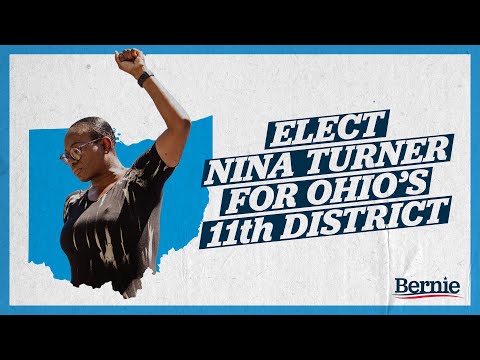
The people need Nina Turner in Congress. I urge the voters of Ohio’s 11th District to elect her this Tuesday, August 3rd.
Join us at www.berniesanders.com!

News…. browse around here


Join our GOTV Rally with Senator Bernie Sanders, Congresswoman Cori Bush, Attorney General Keith Ellison, and Dr. Cornel West to get out the vote for Nina Turner in the final weekend of early voting!

News…. browse around here